

Tongue-Tie and Lip-Tie in Babies: Signs Every Lowell Parent Should Know

Frustrated Mother and Baby.

A lot of parents show up to their baby’s first dental visit already exhausted. Feeding hasn’t gone the way they expected, no one is sleeping much, and somewhere along the way someone mentioned the words “tongue-tie” or “lip-tie” to you without explaining much else. If that’s the situation you find yourself in right now, here’s what those terms mean, what to watch for, and what treatment at Sprout Pediatric Dentistry in Lowell looks like.


What Is Tongue-Tie or Lip-Tie in Babies?

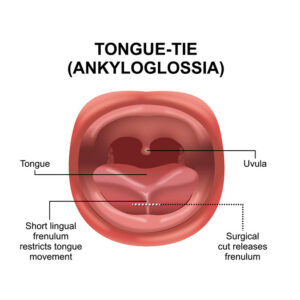
Babies have small bands of tissue called frenula inside their mouths. The lingual frenulum connects the underside of the tongue to the floor of the mouth, while the upper labial frenulum connects the inside of the upper lip to the gum.

A tongue-tie, clinically known as ankyloglossia, occurs when a restrictive lingual frenulum limits the tongue’s movement. Depending on the restriction, a baby may have difficulty lifting, extending, or moving the tongue effectively.

A lip-tie refers to a restrictive upper labial frenulum. However, the appearance of the upper lip frenulum alone does not establish that it is causing feeding problems or that treatment is necessary.

Not every baby with a visible frenulum restriction experiences functional difficulties. The important distinction is whether the tissue actually interferes with activities such as feeding.
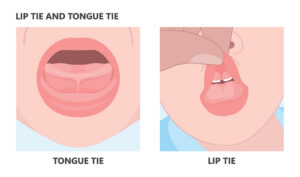
Illustration showing the location of the lingual and upper lip frenulum in a baby.

What Are the Signs of Tongue-Tie in Babies?

Parents often notice possible concerns during breastfeeding or bottle-feeding. Some babies have difficulty maintaining a latch, while others seem to feed for long periods without appearing satisfied.

Possible signs include:

  • Difficulty latching onto the breast or bottle.

  • Frequently losing suction during feeding.

  • Clicking or smacking sounds while nursing.

  • Milk leaking from the sides of the mouth.

  • Prolonged feeding sessions.

  • Difficulty transferring milk efficiently.

  • Poor or slower-than-expected weight gain.

  • Limited tongue movement, including difficulty lifting or extending the tongue.

Breastfeeding parents may also experience persistent nipple pain, nipple damage, or discomfort that does not improve with adjustments to positioning and latch.


These symptoms can have several possible causes. A baby who clicks while feeding or struggles to latch does not necessarily have tongue-tie. A comprehensive feeding assessment is important before deciding whether a frenulum restriction is involved.

Tongue-Tie vs. Lip-Tie: What’s the Difference?

Although these terms are often mentioned together, they describe different anatomical structures.

Tongue-tie (ankyloglossia) involves the tissue beneath the tongue. When movement is restricted, it may interfere with the tongue’s ability to lift, extend, and coordinate during feeding.

Lip-tie involves the tissue connecting the inside of the upper lip to the gum. A prominent upper lip frenulum is common in infants, and its appearance alone does not establish a functional problem.

Some babies have both conditions, while others have neither. The presence of one or both frenula does not automatically mean a procedure is needed.


An examination should focus on function rather than appearance alone. This distinction helps families avoid unnecessary treatment and understand whether a restriction is actually contributing to their baby’s difficulties.

Tongue-Tie and Lip-Tie Treatment at Sprout Pediatric Dentistry

At Sprout Pediatric Dentistry, Dr. Amanda Hankins evaluates tongue and lip mobility and discusses the concerns parents have noticed during feeding.

The goal is to understand whether a restricted frenulum is affecting function and whether treatment may be appropriate.

When a frenectomy is recommended, Sprout offers laser frenulum treatment using Waterlase technology. The procedure is performed in the office, and the team explains the process and what parents can expect before moving forward.

A frenectomy releases the restrictive tissue to allow greater movement. However, the decision to perform one should be based on the baby’s individual needs rather than the appearance of the frenulum alone.

Not every infant with tongue-tie or lip-tie requires a procedure. Feeding support and other nonsurgical approaches may be appropriate depending on the evaluation.

Learn more about tongue-tie and lip-tie treatment at Sprout Pediatric Dentistry.

What Happens After a Frenectomy?

Recovery following a frenectomy can vary from one baby to another.

Some families notice changes in feeding relatively quickly, while other babies need additional time and support to adjust their tongue movements.

After treatment, parents should receive individualized instructions about:

  • Feeding and comfort during the initial recovery period.

  • What the treated area may look like as it heals.

  • Signs of complications that require professional attention.

  • Whether additional feeding support is recommended.

  • When to return for a follow-up evaluation.

It is important to follow the treating professional’s instructions rather than starting stretching exercises or other wound-manipulation routines independently. Current pediatric guidance does not recommend routine wound-opening stretches for infants after frenotomy.

A follow-up appointment can help assess healing, feeding progress, and whether additional support is needed. Releasing the tissue does not automatically resolve every feeding difficulty, since feeding is also a learned skill.
Pediatric dental professional examining an infant's oral anatomy.

When Should Parents Consider a Tongue-Tie Evaluation?

If your baby consistently struggles with feeding, has difficulty maintaining a latch, or is not gaining weight as expected, discussing these concerns with your pediatrician is a reasonable first step.

A tongue-tie evaluation may be worth considering when feeding difficulties persist despite appropriate positioning and lactation support.

Parents do not need to diagnose the condition themselves. A professional assessment can help determine whether restricted tongue movement is contributing to the problem or whether another explanation should be explored.

For families preparing for their baby’s first dental appointment, Sprout also provides guidance through its first dental visit experience.

Frequently Asked Questions About Tongue-Tie and Lip-Tie

Does every baby with tongue-tie need a frenectomy?

No. Some babies have a visible tongue-tie without experiencing functional difficulties. Treatment is generally considered when an evaluation identifies a meaningful restriction that affects feeding and other appropriate interventions have not resolved the problem.

Is a frenectomy painful for babies?

The experience can vary depending on the procedure and the baby’s individual circumstances. Parents should discuss pain management, the treatment approach, and recovery expectations with the dental professional before proceeding.

Can tongue-tie affect breastfeeding?

A restrictive tongue-tie may contribute to difficulty maintaining a latch or transferring milk efficiently in some infants. However, breastfeeding difficulties have many possible causes, so an evaluation should consider the entire feeding picture.

Can a lip-tie cause breastfeeding problems?

The relationship between an upper lip frenulum and breastfeeding difficulties is less clearly established. A visible lip-tie does not automatically mean that treatment is necessary.

Can older children be evaluated for tongue-tie?

Yes. Tongue mobility can be evaluated beyond infancy when parents or healthcare professionals have concerns about oral function. Any possible effects on speech should be assessed by an appropriate speech-language professional rather than assuming a frenulum restriction is the cause.

Will insurance cover tongue-tie treatment?

Coverage varies by insurance plan, procedure, and individual circumstances. Parents should contact their insurance provider and the dental office to understand potential costs before treatment.


Mother holding her happy baby while supporting the child's oral health and development.


Helping Your Baby Feed More Comfortably Starts With the Right Evaluation

Feeding difficulties can be stressful for both babies and parents, especially when the cause is unclear. Understanding the difference between tongue-tie and lip-tie, recognizing possible symptoms, and seeking an appropriate evaluation can help families make informed decisions.

At Sprout Pediatric Dentistry, Dr. Amanda Hankins and the team take time to examine each child, explain their findings, and discuss whether treatment may be beneficial.

If you have concerns about your baby’s tongue movement or feeding difficulties, contact Sprout Pediatric Dentistry in Lowell, AR to learn more about an evaluation.

Every baby is different, and the right approach starts with understanding their individual needs.

We can't wait to meet you!